Point Cloud Classification
Compare point-based classifiers through predicted labels, local attention, and concrete failure cases.
Problem
Point clouds are unordered. Classification needs to preserve useful local geometry while remaining insensitive to the order in which points enter the model.
Approach
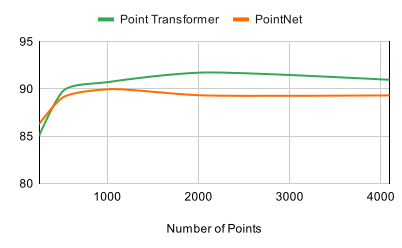
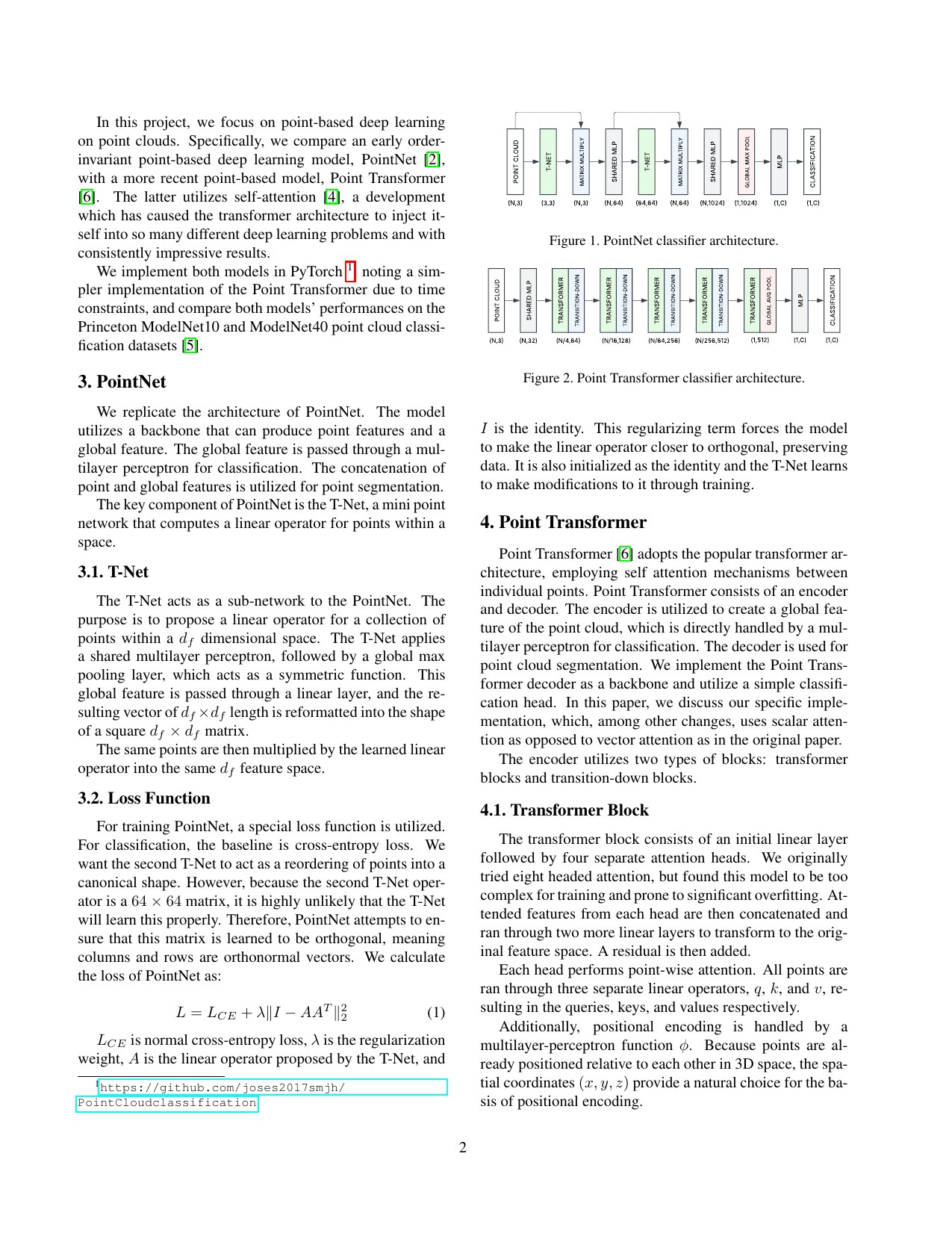
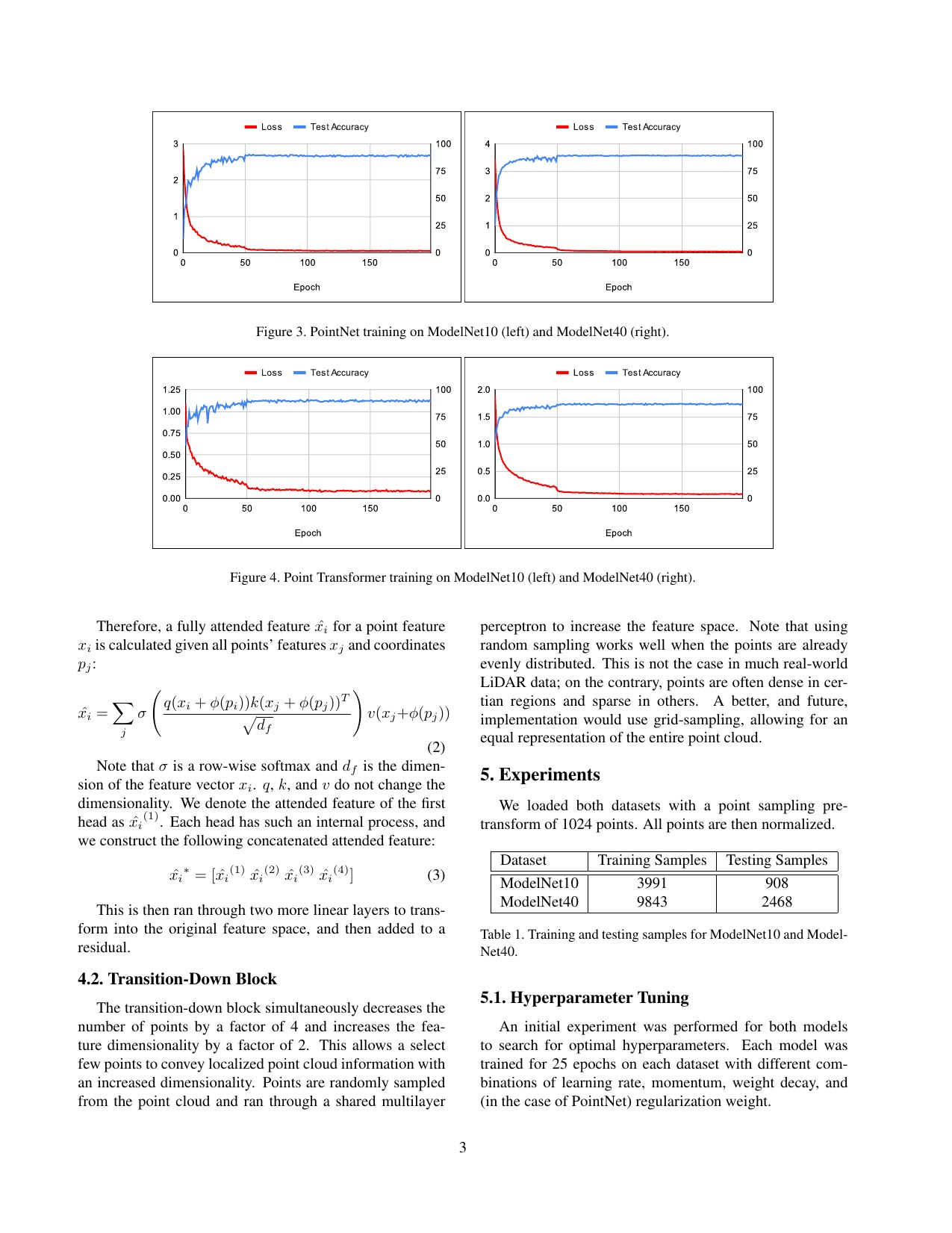
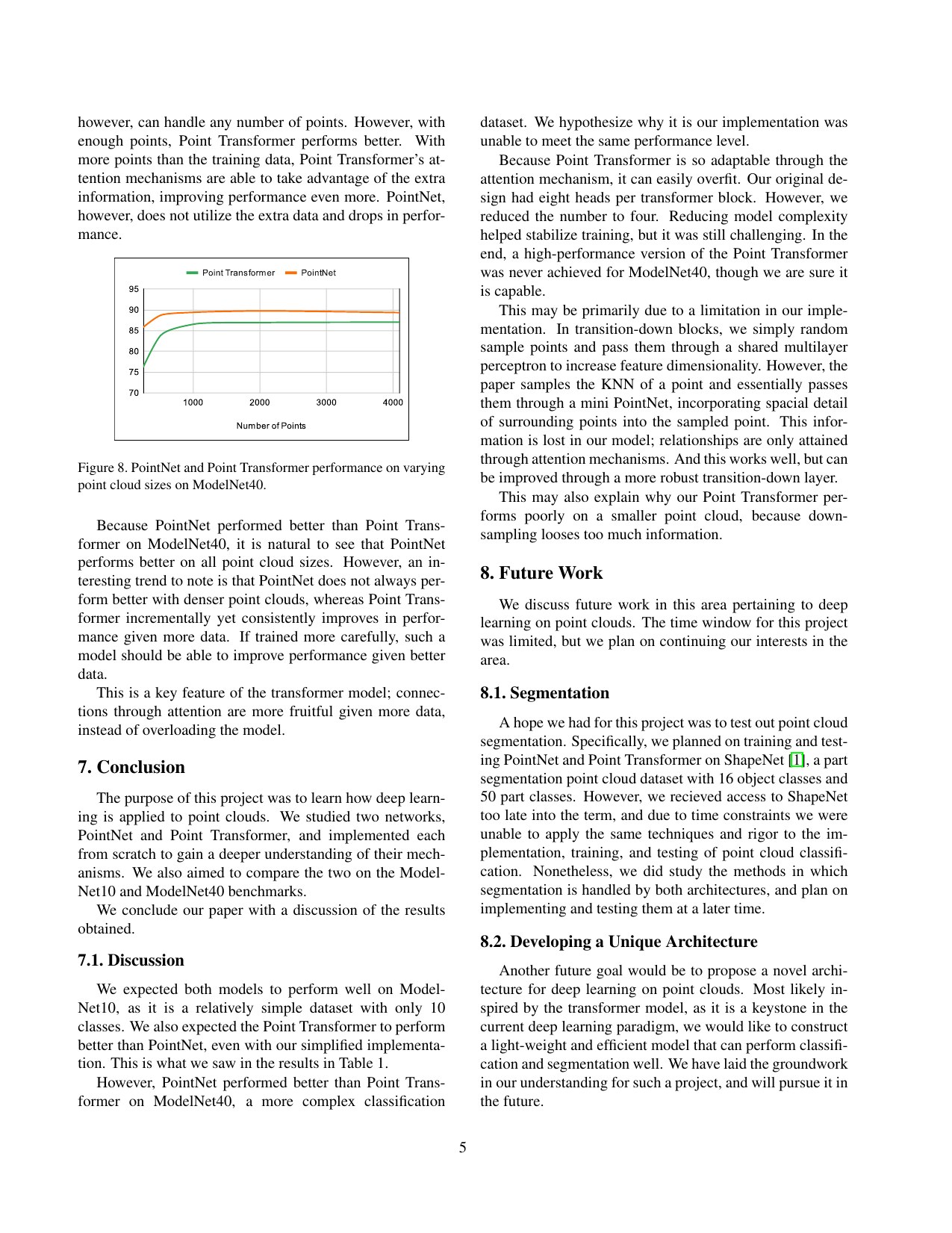
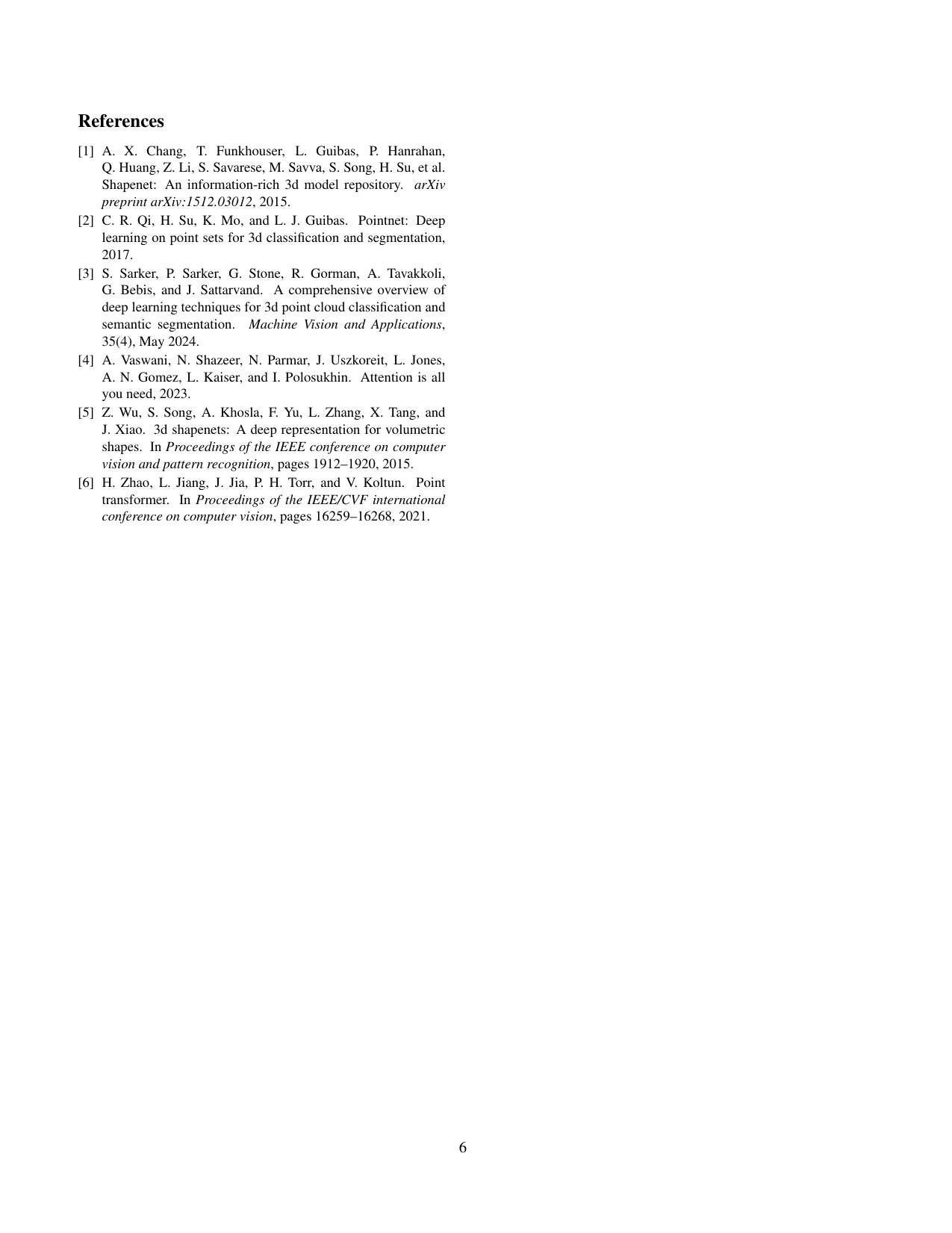
Implemented PointNet-style and attention-based classifiers and evaluated point-cloud predictions. Inspected confusion matrices and point-budget experiments to understand what each architecture retained.
What I built
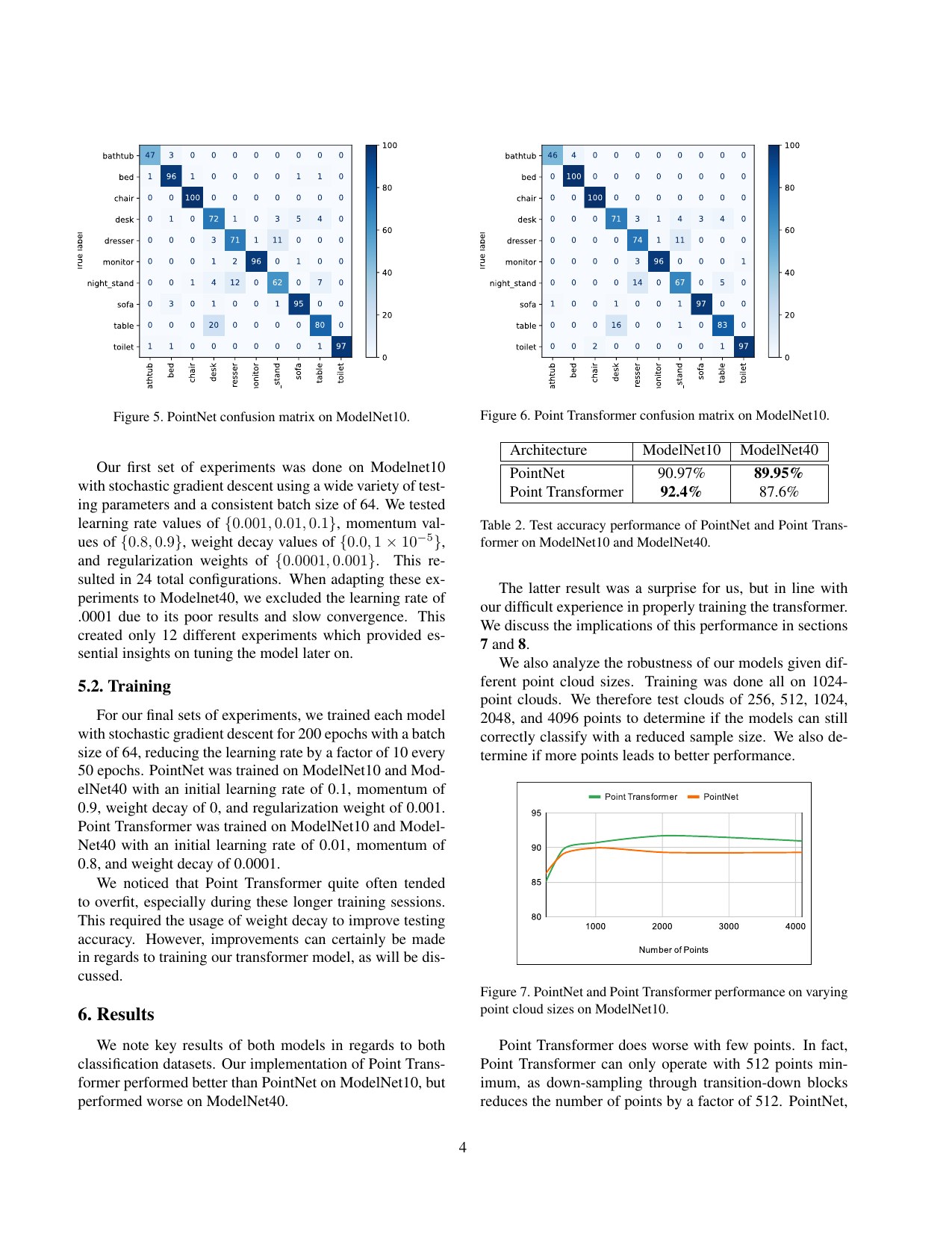
Built and compared point-based neural models in PyTorch, prepared sampled point clouds, and visualized correct predictions and furniture-class confusions.
Result
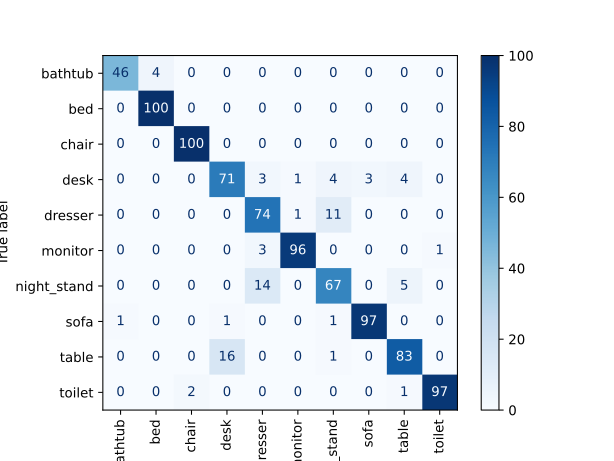
The Point Transformer reaches 86.79% accuracy on 2,468 held-out ModelNet10 clouds, with desk/table confusion the dominant error. Graduate coursework: the figure comes from the training notebook's own saved output, and no deployment claim is made.
Compare the failure patterns
A max-pooled point encoder and a local-attention model make different errors. The confusion matrix makes those errors inspectable; the point-count experiment explores the tradeoff between input budget and classification accuracy.